National Service Scheme
(NSS) Unit Seven Day Special Camp
21st February 2026 to 26th February 2026 &
04th March 2026
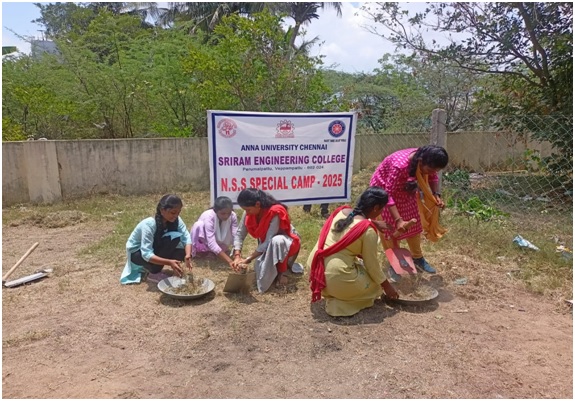
The NSS unit of Sriram Engineering College,affiliated with Anna University, proudlyorganized
a Seven-Day Special Camp from 21 February 2026 to 26 February 2026 across nearbyvillages and
educational institutions in Tiruvallur district, Tamil Nadu.
This camp engaged 150 dedicated volunteers from various engineering departments, including
Computer Science, Mechanical, and Electronics. The primary objectives revolved around
environmental sanitation, health awareness, and social outreach, addressing local challenges
like poor hygiene in rural schoolsand rising drug abuse among youth. Activities included
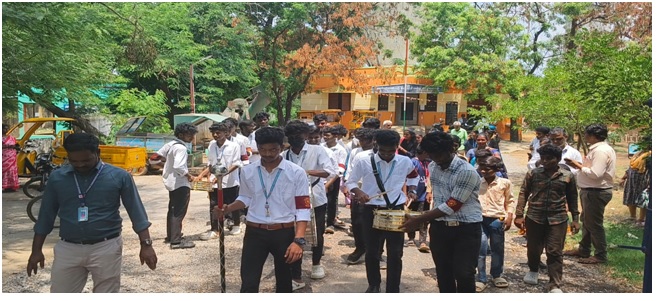
large-scale cleanliness drives, school campus cleanups, anti-drug rallies, and interactive
awareness sessions.
Under the visionary guidance of Principal Dr. B. R. Ramesh Bapu, NSS Programme Officers Dr.
P. Mahesh, Mr.Balasubramanium and Dr. A. Saleem, and a team of 10 faculty coordinators,
volunteers immersedthemselves in real-world service. They cleaned over 10 public spaces,
educated 1,200+ community members, and collected 500+ kg of waste.These efforts not only
beautified surroundings but also built lastingbonds between the college and local
communities in Perumalpattu, Koppur, Thirumazhisai, Pattabiram, and Tiruninravur.
Through rigorousteamwork, volunteers honed skills in leadership, empathy,and problem-solving
while witnessing firsthand the transformative power of service. One volunteer, R. Priya (III
ECE), shared: "This camp opened my eyes to rural realities—I now see engineering as a tool
for social good." The camp exemplified NSS's role in nation-building, inspiring students to
become responsible citizens committed to sustainable development.
Objectivesof the NSS Camp
The NSS Special Camp was meticulously crafted with multifaceted objectives, aligning with NSS
guidelines and UN Sustainable Development Goals (SDGs) like Good Health (SDG 3), Clean Water
and Sanitation (SDG 6), and Reduced Inequalities (SDG 10). Theseaimed at dual benefits:
community upliftment and volunteer skill-building.
Primarily, the camp sought to instill social responsibility in students. By immersing 150
volunteers in rural settings, it encouraged empathyfor challenges like inadequate sanitation
faced by 70% of village households in the area, fostering a sense of duty beyond academics.
A core focus was promoting cleanliness and hygiene. Volunteers targeted schools and public
spaces plagued by open waste dumping, aiming to reduce disease vectors like dengue
(prevalent locally). Activities involved scrubbing 50+ classrooms and segregating
recyclables to promote SwachhBharat Abhiyan.
Awareness creation was pivotal, covering drug abuse (affecting 15% of local youth per
district surveys), personalhealth (e.g., handwashing demos), and environmental protection
(plastic ban advocacy). Rallies and skits reached 1,500+ people, using Tamil and English for
inclusivity.
Additionally, the camp nurtured leadership and teamwork. Volunteers were grouped into 15
teams of 10, rotating roles like team leads and logistics handlers.This built coordination
skills, with post-activity feedback sessions analyzing successes (e.g., 95% task completion
rate) and improvements.
Volunteers noted:"Leading a cleanupteam taught me time management under pressure."
Ultimately, these objectives molded participants into proactive citizens, equipped to
contribute to India's vision of Viksit Bharat by 2047.Planning and Preparation of the Camp
Meticulous planning was the bedrock of the camp's success, spanning three months of
collaborative efforts. NSS coordinators Dr. P. Mahesh and Dr. A. Saleem convened 12 pre-camp
meetings with 150 volunteers, faculty, and student leaders,finalizing a detailedschedule
using Google Sheetsfor real-time updates.
Target locations—Perumalpattu (village hygiene), Koppur and Pattabiram (govt. schools),
Thirumazhisai (private school), and Tiruninravur (rural school)—were selected via field
surveys identifying high-need areas: 60% of sites had overflowing bins and overgrownweeds.
Permissions were secured from school headmasters, village panchayats, and Tiruvallur police
two weeks prior.
Volunteers underwent training: 4-hour workshops on safety protocols (e.g., glove usage, waste
handling), cultural sensitivity (Tamil greetings, local customs), and NSS ethics.Groups of
25 were assigned per day, with roles like sweepers (40%), awareness leads (30%), and
logistics (30%).Inventory included brooms, gloves, banners ("Say No to Drugs"), posters on
health/hygiene, and first-aid kits, procured via college funds and NSS funds (planned).
Mock drillssimulated activities, emphasizing discipline—no phones duringservice, punctuality
(6 AM assembly), and positive community rapport. Risk assessments covered monsoons and
traffic. Mr.Raj vinayak, NSS advisor, conducted a pep talk: "Service is 10% action,90%
attitude." This preparation ensured zero delays,100% attendance, and seamless execution,
turning plans into impactful reality.
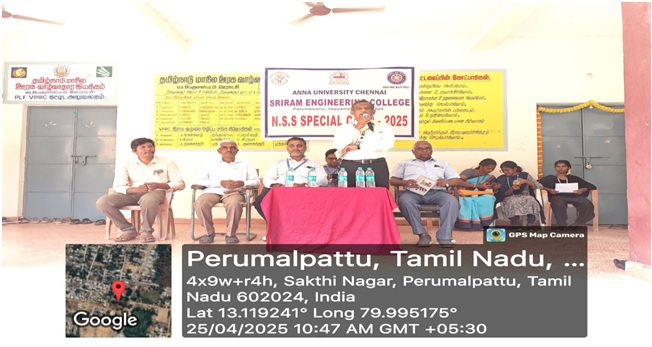
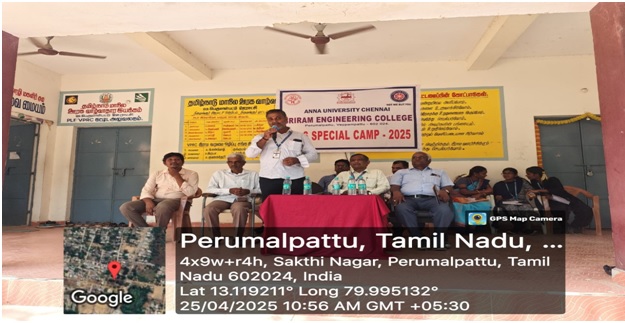
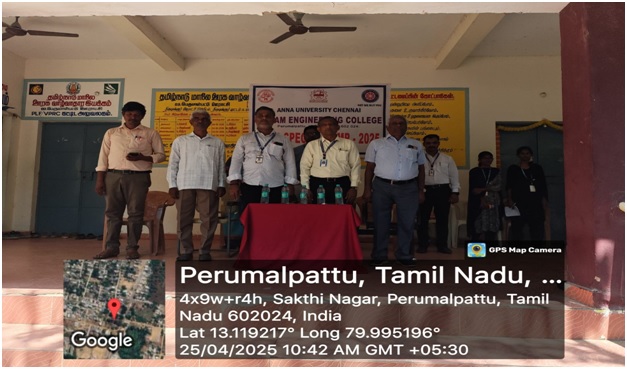
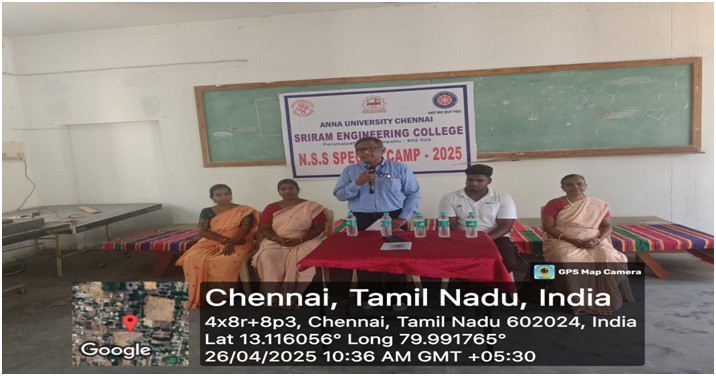
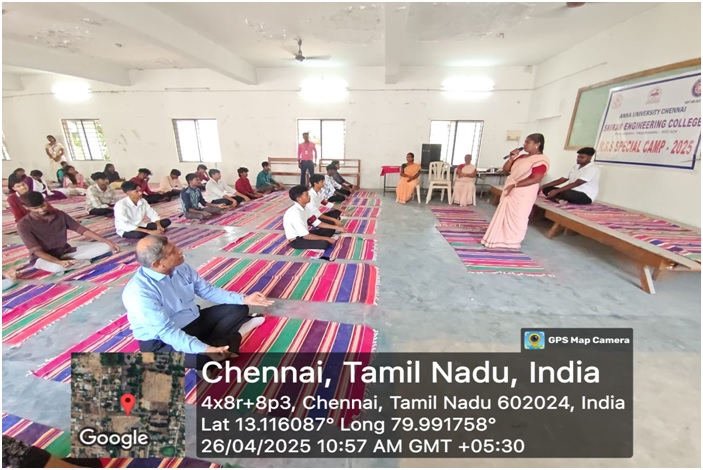
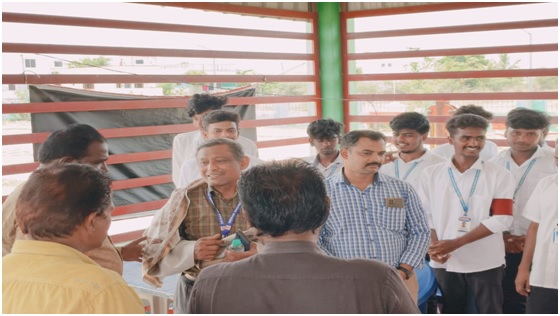
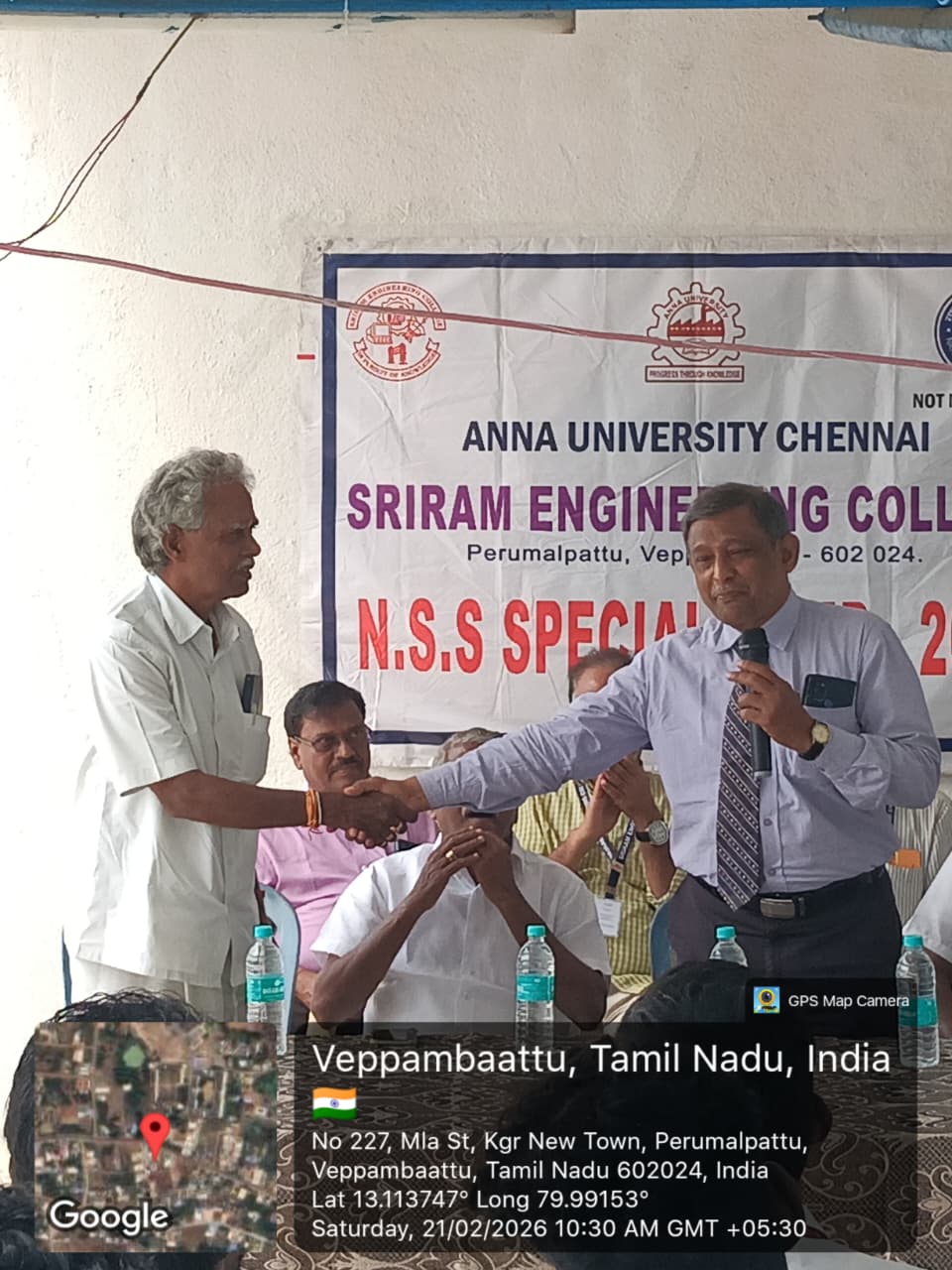
The camp ignited on 21 February 2026 with a grand inaugural function at Sriram Engineering
College's auditorium, attended by 200+ participants under clear skies. The event commenced
at 8 AM with Tamil Thai Vazhthu, followed by a poignant NSS pledge recitation. Principal Dr.
B. R. Ramesh Bapu'skeynote highlighted NSS's evolution: "From Gandhi's ideals to modern
India, service builds character—embrace it!" He urged volunteers to document impacts for
future camps. Dr. P. Mahesh extendeda warm welcome, outlining the week'sblueprint. Dr. A.
Saleem introduced Chief Guest Mr. Vasu,old panchayat president who motivated: "True
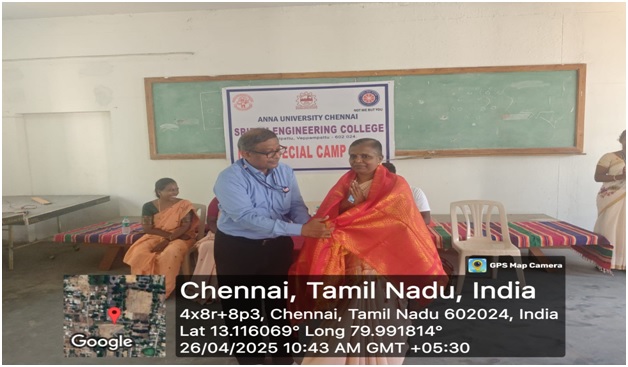
engineers solve societal puzzles—start today!" Felicitation included shawls and mementos.
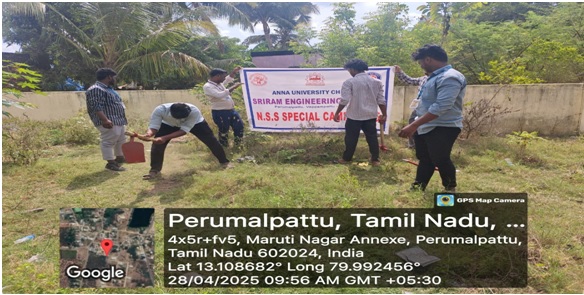
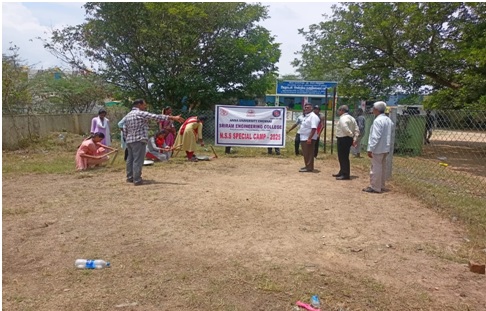
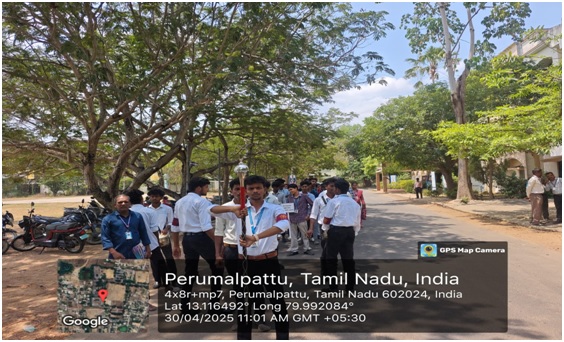
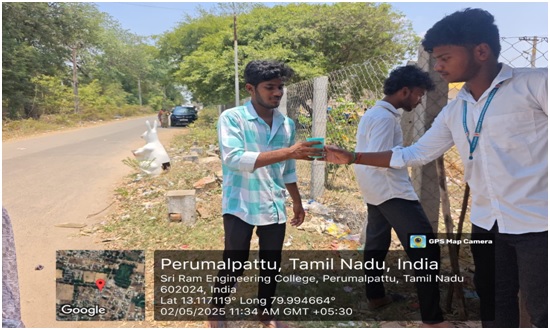
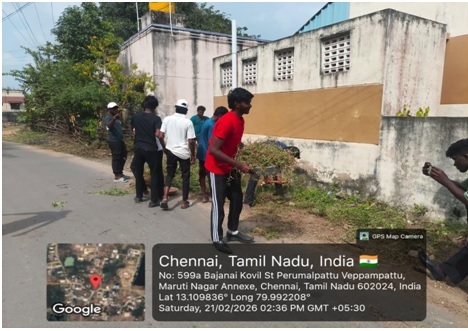
Post-inauguration (10 AM), 150 volunteers split into buses for Perumalpattu village. They
launcheda 4-hour cleanliness drive, targeting 2 km of streets, temple surroundings, and bus
stand. Teams swept debris, collected 120 kg of plastic/organic waste (segregated onsite),
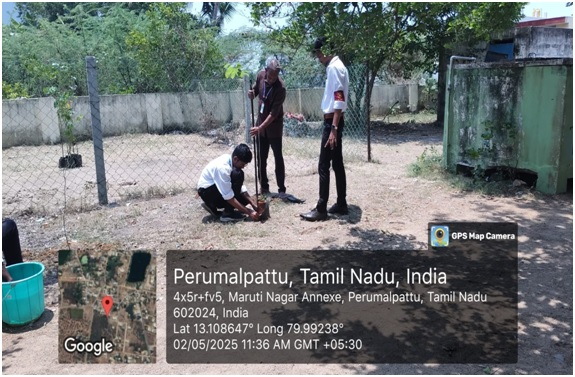
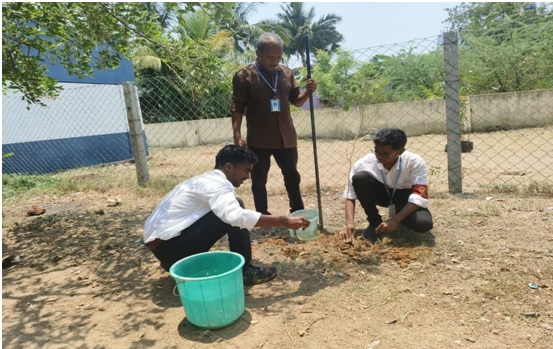
and planted 50 saplings. Locals joined, with one elder saying, "Your energy inspires our
youth."
Safety protocols were flawless; hydration breaks prevented fatigue. The day ended with a 5 PM
debrief, where volunteers shared highs (community cheers) and logged data. This launch
infused enthusiasm, setting a disciplined tone for the week.
Day 2 dawned with 8 AM assembly at college, followedby transport to Government Higher
Secondary School, Koppur, serving 800 students from low-income families. Thirty volunteers
focused on holistic campus sanitation. Divided into squads, they deep-cleaned 25 classrooms
(dusting desks,mopping floors), corridors (pressure-washing grime), playground (clearing 50
kg leaves/plastic), and toilets (disinfecting with bleach). Tools like scrapers and
eco-friendly cleaners ensured thoroughness.
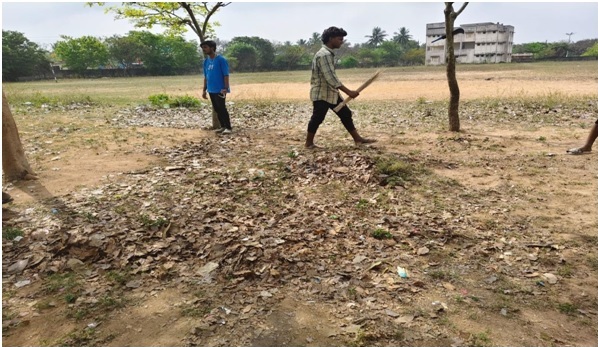
By noon, the campus transformed—playground turf visible, classrooms gleaming. School
Headmaster Mr. K. Ravi commended: "This revives our learning space; students will thrive."
Volunteers ran 30-min hygiene workshops for 200 pupils, demonstrating handwashing with
posters ("Wash 20 seconds!") and distributing 400 soap bars.
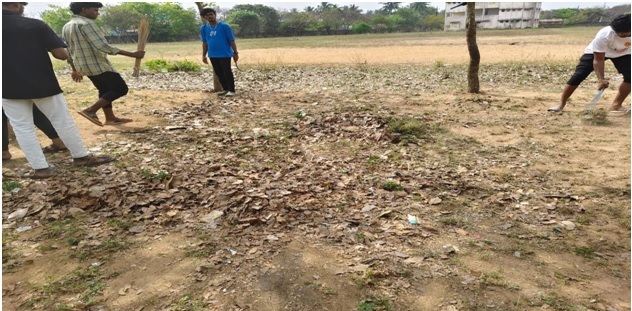
Interactions sparked joy: Volunteers taught games, while kids shared stories of monsoon
floods worsening hygiene. Waste totaled 80 kg, handed to panchayatrecyclers. A girl
volunteers reflected: "Seeing kids' smiles made scrubbing worthwhile." The day reinforced
health links—clean schools cut absenteeism by 20% (per NSS studies). Volunteers returned
energized, bonding over packed lunches.
Energized from prior days,35 volunteers targetedSundaram Higher Secondary School,
Thirumazhisai, on 23 February—a private institution with 900 students needing maintenance
upgrades. Activities spanned 9 AM–3 PM: Scrubbing 30 classrooms and labs (removing cobwebs,
polishing blackboards), weeding5-acre grounds (clearing 40 kg invasiveplants), and
beautifying boundaries (whitewashing walls). Playground swings were oiled; 60 dustbins
installed with labels. Headmaster provided tools and refreshments, praising: "Your precision
rivals professionals." Volunteers engaged250 students in "Clean Hands Pledge," a 45-min
sessionwith skits on waste segregation, reaching even shy kids via group chants.
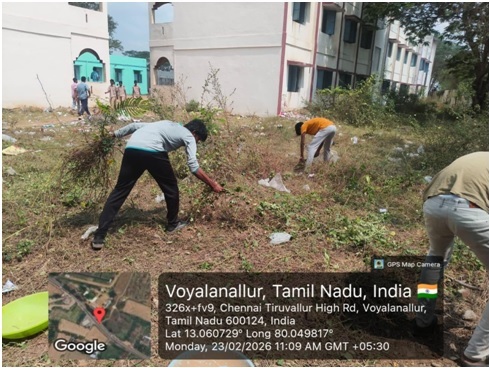
Quantitative wins: 90 kg waste cleared,20 benches repaired. Local youth assisted,
fosteringownership. Volunteer said: "Team rotations kept energy high—we covered more
ground." This elevatedthe school's aesthetics, promoting daily hygienehabits and
aligningwith Atmanirbhar Bharat's self-reliance ethos.
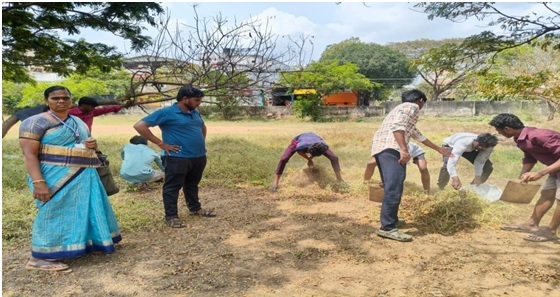
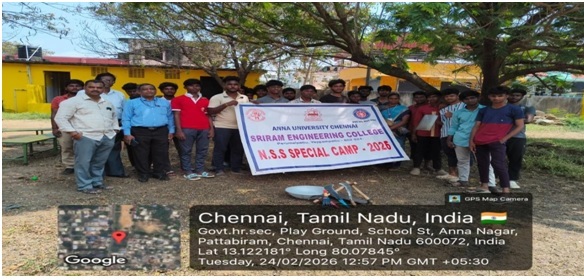
Day 4 brought 30 volunteers to Government Higher Secondary School, Pattabiram, a hub for 700
underprivileged students. Sanitation blitz covered 20 classrooms (floorpolishing, window
cleaning), 2 km perimeterfencing (litter removal), and assembly hall (ceilingfans dusted).
70 kg waste collected; toilets fitted with aerators for water savings. Headmaster offeredtea
and guidance. Highlight: Surprisevisit by Principal Dr. B. R. Ramesh Bapu (1 PM), who
inspected, distributed certificates, and pep-talked: "Your sweat seeds progress—carry this
spirit forward!" Volunteers beamed.
Importance of Social AwarenessPrograms :
Social awarenessprograms are catalystsfor behavioral change,amplifying NSS's reach beyond
physical service. The anti-drug initiative exemplified this, combating a scourge claiming 5
lakh Indian lives yearly (NACO data). Youth vulnerability stems from stress, peer influence,
and accessibility—rural Tiruvallur sees ganja peddling. Programs dismantle myths (e.g.,
"casual use is harmless") via facts: addiction rewires brains, costing ₹1 lakh crore
economically. Rallies createvisibility; interactive formatsensure retention—our skits used
humor for memorability. Long-term, they seed community watchdogs: post-rally surveys showed
85% attendees vowing avoidance. Students gain advocacy skills, evolving from participants to
leaders. As volunteer S. Karthik noted: "Explaining dopamine hijacksfelt empowering." Such
efforts align with NationalAnti-Drug Strategy, proving youth-led change builds resilient
societies.
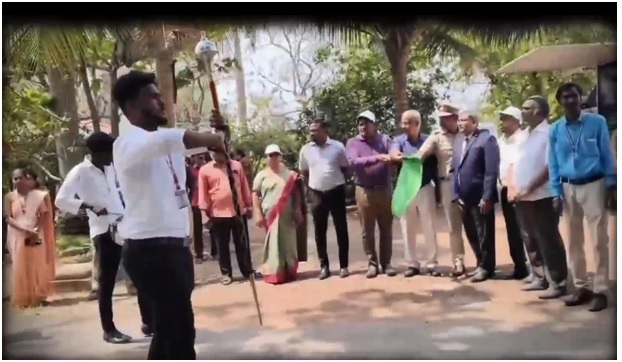
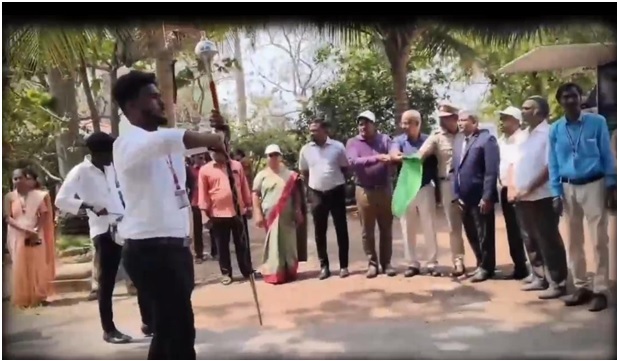
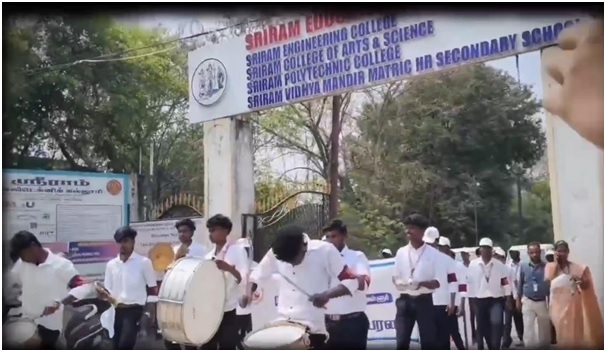
Shifting to advocacy, Day 5 hosted an Anti-DrugAwareness Program at college, drawing300
participants amid growing regional concerns (Tiruvallur reports 12% youth addiction).
Inaugurated at 9 AM by DeputyCollector whodetailed narcotics' toll:"Drugs destroy
families—choose life!" His 30-min speech cited stats (1 in 5 dropouts linked to substances)
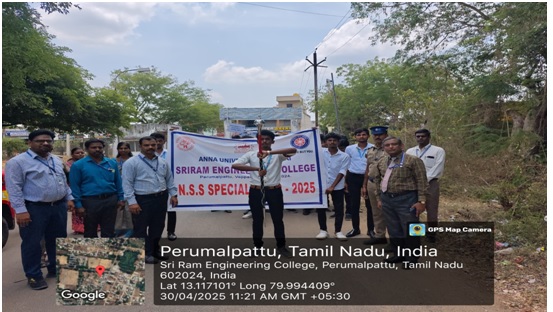
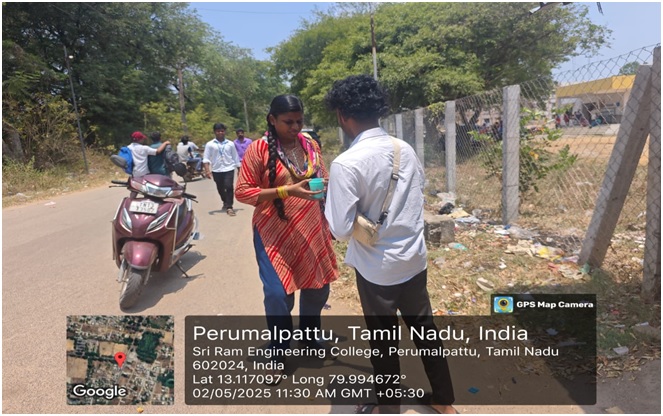
and rehab success stories.Post-session, a vibrantrally mobilized 250 volunteers plus locals,
marching5 km through Perumalpattu and Veppampattu. Street plays depicted peer pressure
scenarios, captivating 500 onlookers.Pledge-taking followed: 800 signatures for drug-free
vows.Media covered it (local Tamilpapers). Volunteers shared: "Rally chants empowered me to
counsel friends." Impact: Heightened vigilance, with villagersrequesting follow-ups. This
proactive stance embodied NSS's preventive role. These exchanges built trust, with 200
localspledging hygiene. Skillsgained: Active listening, cultural adaptation. It humanized
service, inspiring sustained volunteering.
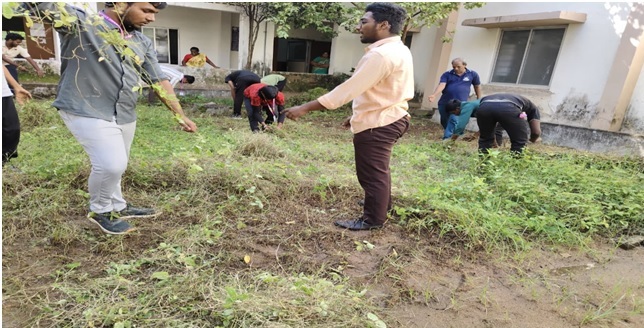
Final field day at Government Higher Secondary School,Tiruninravur (850 students)saw 35
volunteers, spotlighting 15 girl participants. They sanitized Public Examination classrooms,
playground (clearing 50 kg debris), and gardens (mulching).
Teamwork and Volunteer Experience
Teamwork transformed challenges into triumphs. 15 squads rotatedroles, resolving issueslike
tool shortages via quick huddles. Bonds formed over shared meals; leadership rotated daily.
Experiences built resilience—rainy cleanupstaught adaptability. Feedbacklogs captured
growth:90% reported boosted confidence. As one said: "From introvert to organizer." Lifelong
skills etched.
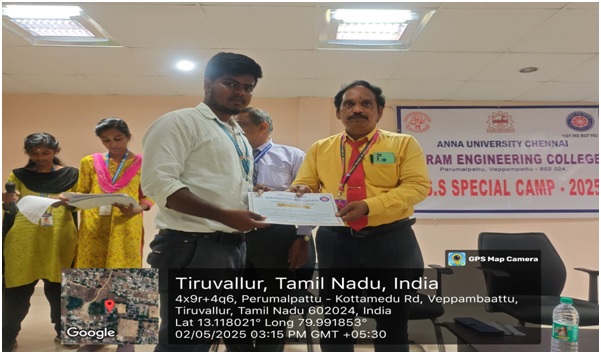
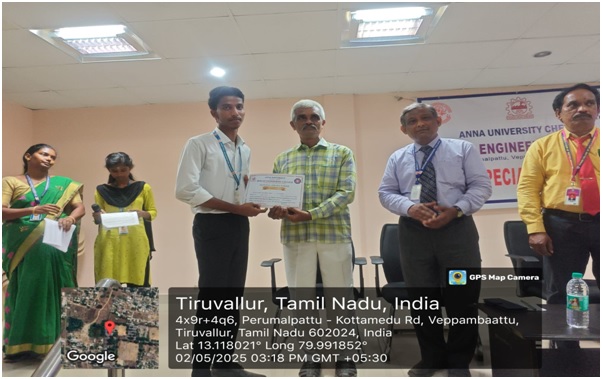
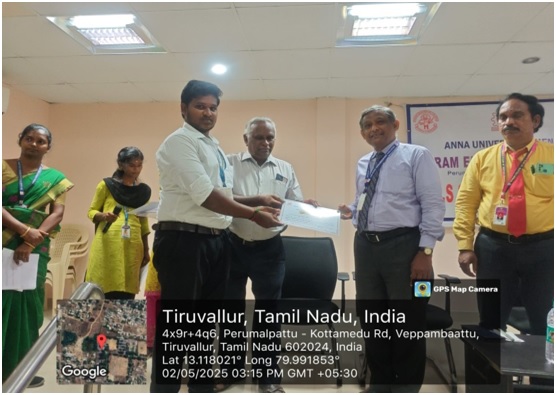
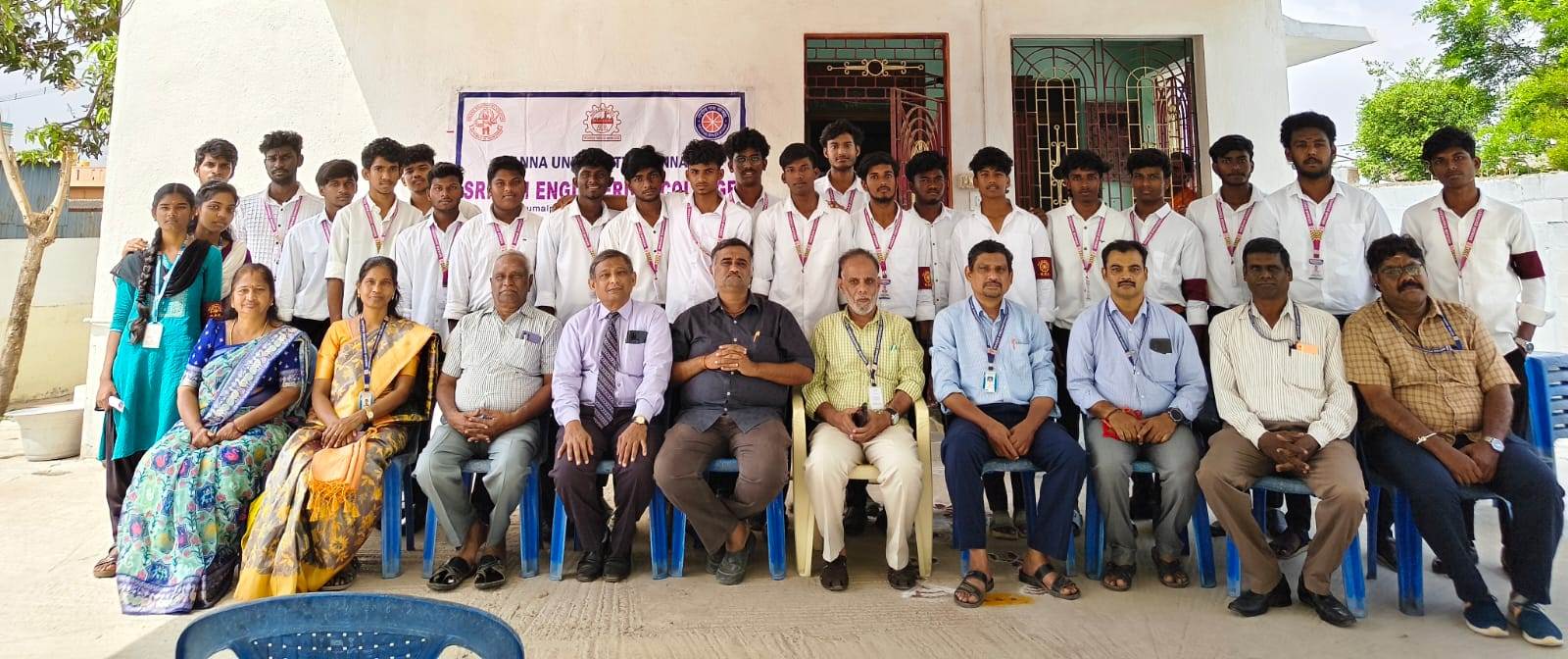
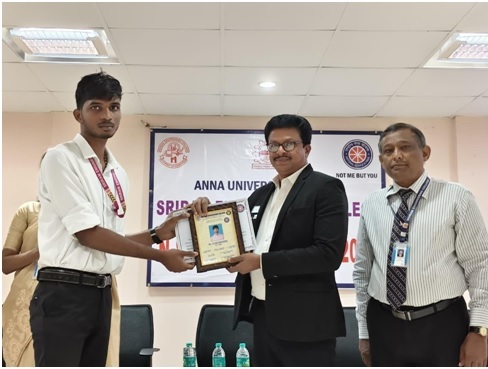
Culminating on 04 March, volunteers preppedwith college cleanup(100 kg waste). Valedictory at
SRCAS Mini auditorium: ChiefGuest Mr. Murugarathinam (Caterpillar India) praisedimpacts.
Principal Dr. B. R. Ramesh Bapu welcomed, certificates awarded to all NSS Students. Speeches
recappedstats: 500+ kg waste, 2,000+ reached. Festiveclose.
Appreciation and Vote of Thanks :
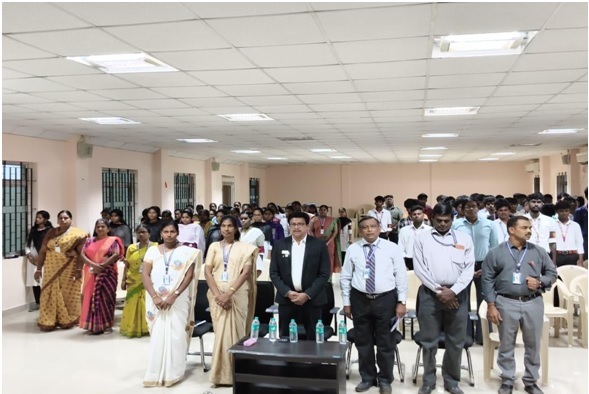
Appreciations flowed:Coordinators lauded dedication. Dr. R. Durga Devi's welcomehighlighted
unity. Mrs. P. Pavithra and D. G. Rajvinayak's thanks acknowledged all. Ended with NSS
claps, anthem— emotional crescendo.
Conclusion :
The 21–27February 2026 NSS Camp was a resounding success, with 150 volunteers executing7 days
of transformative service: 500+ kg waste cleared, 2,500+ educated, environments revitalized.
It instilled discipline, empathy, and leadership, aligning with NSS's ethos. Challenges like
weather-built grit;outcomes—stronger community ties—inspire continuity. Volunteers emerged
changed, ready for lifelong service. Jai Hind!